
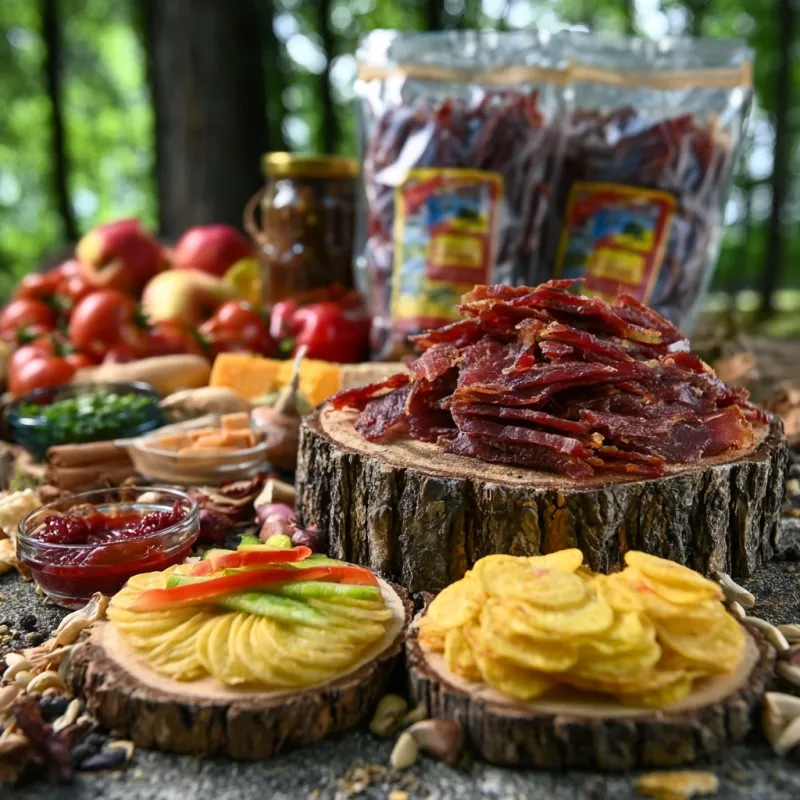
You open the lid and the first thing hits you — a smoky, savory aroma that cuts through the pine and campfire smoke. Inside the container, strips of dark beef, pale turkey, and earthy mushroom jerky sit beside toasted almonds, chewy mango, and coconut flakes. No cooler. No ice. Just a box of protein-packed, shelf-stable snacks that will keep the whole crew happy for days.

I build my jerky boxes around one rule: keep moisture out. That means drying each ingredient to the right point, storing them separately, and packing a small food-grade silica gel pack in the container. The result is a trail snack that doesn’t need refrigeration and won’t turn into a science experiment by day three.
Why a Jerky Box Works for No-Fridge Camping
Jerky is the original make-ahead camp food. When dried properly, it stays safe at room temperature for weeks because the low moisture prevents bacterial growth. The key is hitting that exact moisture level — too wet and it spoils, too dry and it becomes brittle and unappetizing.
I keep the ratio at 1 pound of meat per batch, sliced no thicker than 1/4 inch. Thicker slices trap moisture in the center, leading to spoilage. Thinner slices dry too fast and turn into leather. The 1/4-inch sweet spot gives you a tender chew with a dry exterior.
Choosing Your Proteins
Beef top round is my go-to for traditional jerky. It’s lean, inexpensive, and slices cleanly. Turkey breast works the same way — just trim all visible fat because fat goes rancid without refrigeration. For a vegan option, portobello mushrooms are a game-changer. They absorb marinade like a sponge and develop a meaty texture when dried.
I always make three types in one batch: beef, turkey, and mushroom. That way everyone at the campsite has a choice, and the variety keeps the box interesting over multiple days.
The Marinade That Does Double Duty
The same base marinade works for all three proteins. Tamari gives umami, honey adds a touch of sweetness to balance the smoke, and liquid smoke mimics that campfire flavor without the fire. I divide the marinade into three bowls so the flavors don’t cross-contaminate — especially important if you’re keeping the mushroom batch vegan.
Marinate for at least 4 hours, but 6 is better. Overnight in the refrigerator (if you have a cooler) deepens the flavor, but 4 hours at room temperature in a sealed bag works fine if you’re prepping at home.
Drying: The Make-or-Break Step
I use a dehydrator set to 160°F (71°C). That temperature is high enough to dry the meat quickly but low enough to avoid cooking it. If you’re using an oven, set it to the lowest temperature — usually around 170°F (77°C) — and prop the door open with a wooden spoon to let moisture escape.
Here’s the mistake I see most often: pulling the jerky too early. The strips should be dry to the touch but still flexible. When you bend a piece, it should crack slightly but not snap in half. If it feels moist or sticky, put it back for another 30 minutes. Mushroom jerky takes less time than meat — check it after 3 hours.
Let the jerky cool completely on a wire rack for 30 minutes before packing. This step isn’t optional. Residual steam trapped in the container creates condensation, which leads to mold.
Building the Box
I layer the jerky types in separate compartments of a large airtight container. If you’re using zip-top bags, press out all the air before sealing. Add a small food-grade silica gel desiccant pack to absorb any ambient moisture. Then add the dry goods: toasted almonds, dried mango strips, and unsweetened coconut flakes. Keep these in separate bags inside the box so the moisture from the fruit doesn’t soften the jerky.
The box stays good for up to two weeks in a cool, dark place. If you’re camping in hot weather (above 80°F / 27°C), keep the box in the shade or bury it in a cooler without ice — the insulation alone helps. For longer trips, freeze the jerky at home and pack it frozen; it will thaw over the first day and stay safe for the rest of the trip.
Common Allergens and Substitutions
This recipe contains soy (tamari), gluten (if using regular soy sauce), and tree nuts (almonds, coconut). For a nut-free version, replace almonds with pumpkin seeds and skip the coconut. For gluten-free, use tamari or coconut aminos. For vegan, use only the mushroom jerky and replace honey with maple syrup. Always check labels on Worcestershire sauce — some brands contain anchovies.
For specific dietary needs, consult a qualified professional. This information is educational and not medical advice.
The Takeaway
A well-built jerky box turns a potential food-safety headache into the easiest meal prep of your trip. No cooler, no ice, no worry. Just open the lid and grab a handful. The aroma of smoke and spice will draw everyone to your campsite — and that’s exactly the point.
Frequently Asked Questions
Can I use a regular oven to make jerky instead of a dehydrator?
Yes. Set your oven to the lowest temperature (usually 170°F or 77°C). Place strips on wire racks over baking sheets so air circulates. Prop the oven door open about 2 inches with a wooden spoon to let moisture escape. Rotate trays every 2 hours. Drying time will be 4-6 hours depending on thickness.
How do I know when the jerky is fully dried and safe to store without refrigeration?
The jerky should be dry to the touch but still flexible. When you bend a strip, it should crack slightly but not snap in half. If it feels moist or sticky, continue drying in 30-minute increments. Properly dried jerky has a leathery texture and no visible moisture beads.
Can I make this jerky box vegan?
Absolutely. Replace beef and turkey with extra portobello mushrooms or use sliced extra-firm tofu (pressed and sliced thin). For the marinade, use maple syrup instead of honey and vegan Worcestershire sauce. Drying times remain similar. Note that tofu jerky will be more delicate, so handle gently.
Crowd-Pleasing No Fridge Camping Jerky Box
Ingredients
Equipment
Method
- Slice beef and turkey against the grain into 1/4-inch thick strips. Slice mushrooms into 1/4-inch thick strips.
- In a bowl, whisk tamari, Worcestershire, honey, liquid smoke, garlic powder, onion powder, paprika, and pepper. Divide into three separate bowls.
- Marinate beef strips in one bowl, turkey in another, mushrooms in the third. Cover and refrigerate 4-6 hours (or overnight for deeper flavor).
- After marinating, blot excess liquid from each strip with paper towels. Arrange strips in single layers on dehydrator trays or parchment-lined baking sheets.
- Dehydrate at 160°F (71°C) for 4-6 hours, until dry but still pliable. For oven method: place in 170°F (77°C) oven with door cracked open, rotate trays every 2 hours, total time 4-6 hours. Check flexibility — jerky should bend and crack but not snap.
- Let jerky cool completely on racks for 30 minutes. This step is crucial: residual moisture can lead to spoilage.
- While jerky cools, toast almonds in a dry skillet over medium heat for 3-4 minutes until fragrant. Let cool.
- Assemble the jerky box: layer beef jerky, turkey jerky, mushroom jerky, almonds, dried mango, and coconut flakes in separate compartments of a large airtight container or divide into individual zip-top bags. Keep each type separate to prevent moisture transfer.
- Store in a cool, dark place. Will keep for up to 2 weeks without refrigeration. For longer storage, freeze up to 3 months.